
Share this article
NEW YORK, April 28th, 2026 — A cultural exchange forum titled “Artifacts as Vessels of the Dao: Contemporary Cultural Documentation and the Artistic Inheritance and Enduring Value of Cultural Heritage” convened in New York City on Monday, bringing together leaders from business, diplomacy, and cultural institutions to explore how cultural memory is preserved in an era of rapid technological change.
The event was co-hosted by the China General Chamber of Commerce–USA (CGCC), in collaboration with Shanghai Construction (America) Co., Ltd. and Baoyin Culture Co., Ltd. Approximately 50 participants attended, including CGCC member companies, representatives from the Chinese Consulate General in New York, and United Nations-related organizations.
Against the backdrop of accelerating digital transformation, discussions centered on a shared question: how cultural knowledge, identity, and historical memory can be effectively recorded and transmitted across generations in an increasingly fast-moving information environment.
In his opening remarks, Winfred ZHANG, Vice Chairman of CGCC and President & CEO of Shanghai Construction (America) Co., Ltd., emphasized the importance of cultural continuity alongside economic development. He noted that the concept of “Artifacts as Vessels of the Dao” reflects the idea that material objects can carry both historical memory and enduring values. He also highlighted the evolving role of enterprises, suggesting that businesses today contribute not only to economic activity but also to cultural interpretation and the preservation of intangible heritage.
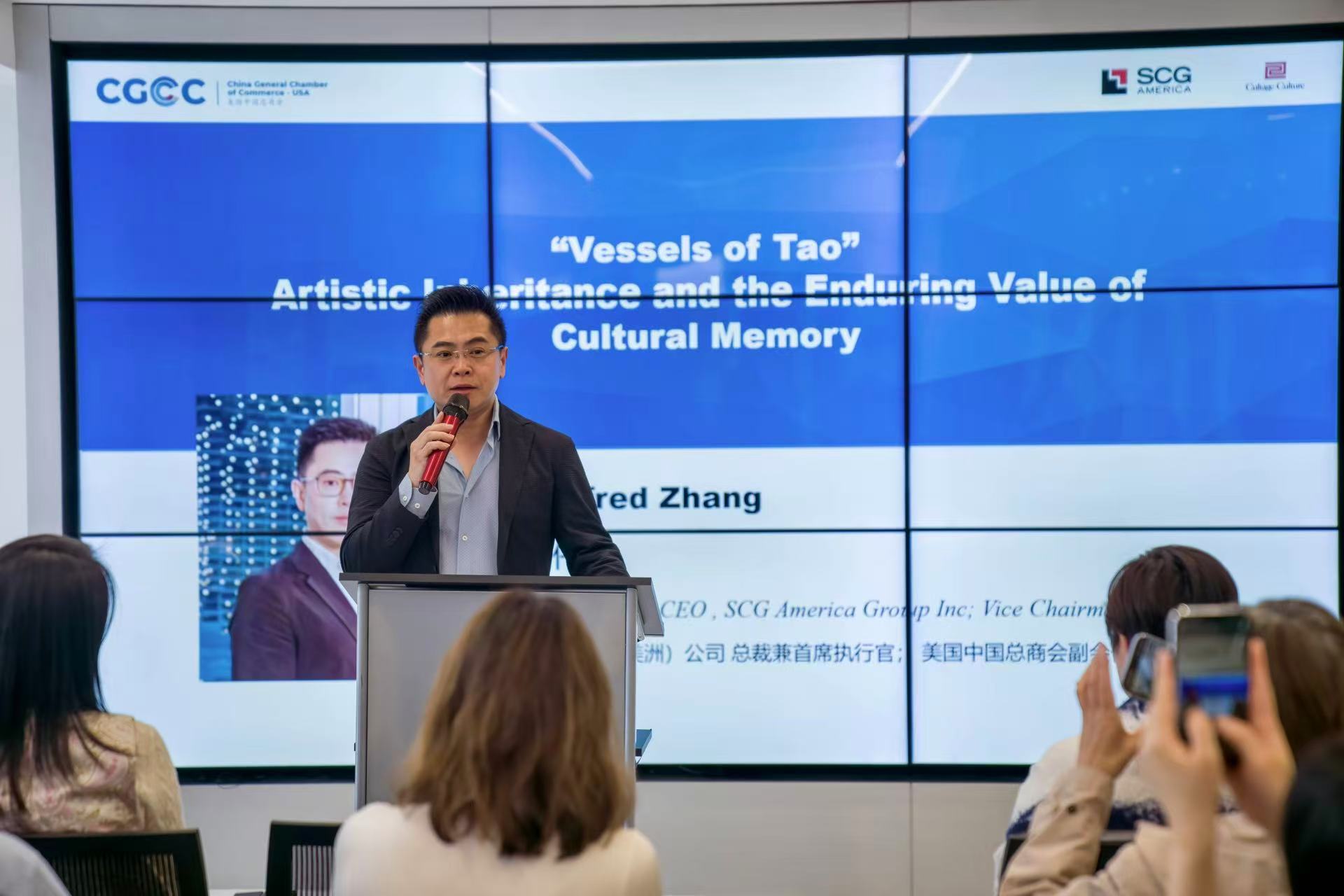 Winfred ZHANG, Vice Chairman of CGCC and President & CEO of Shanghai Construction (America) Co., Ltd
Fan ZHANG, Economic and Commercial Counselor at the Chinese Consulate General in New York, said cultural exchange remains a critical foundation for international understanding. He added that expanding the forms and platforms of cultural communication can help build trust and strengthen cross-border cooperation.
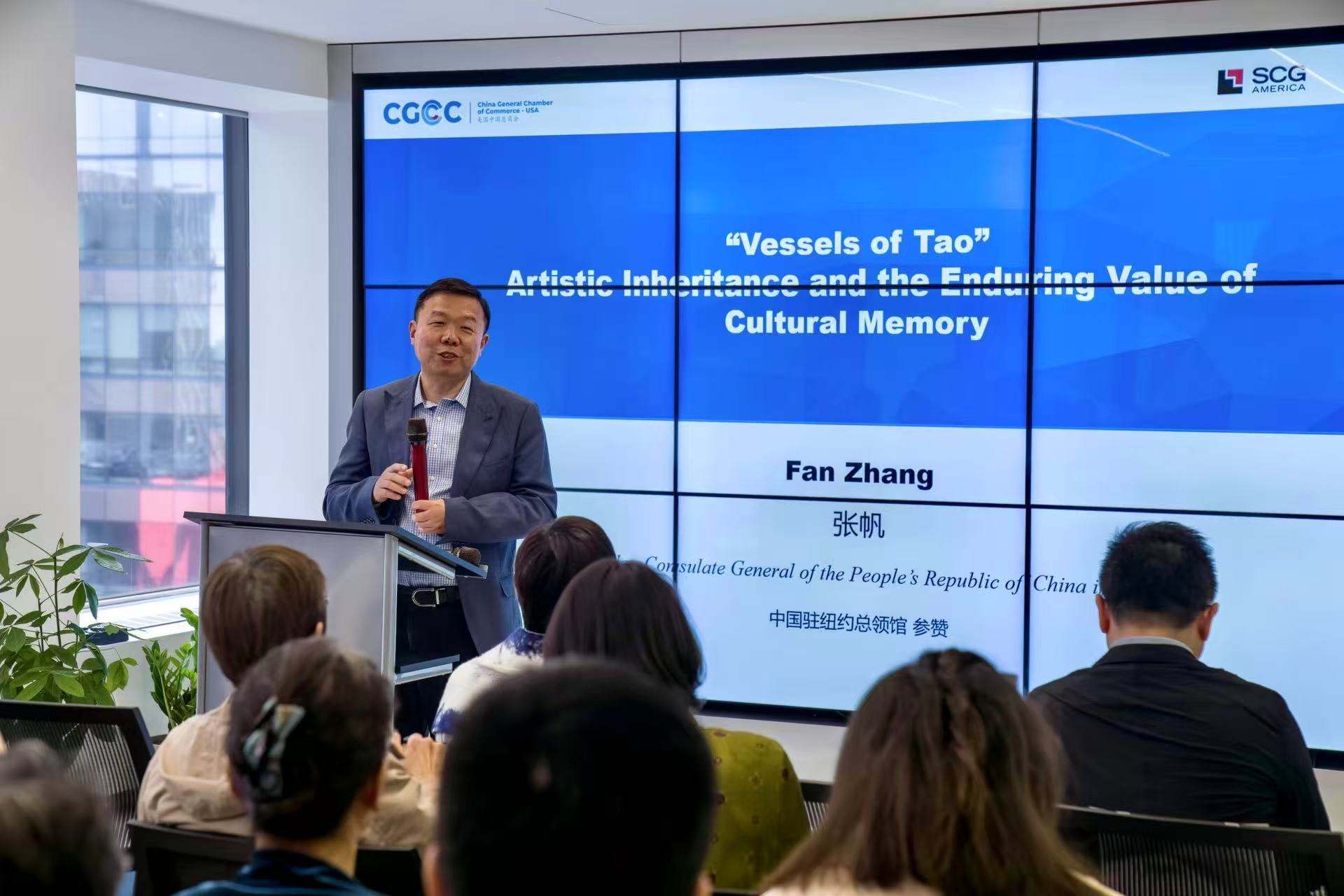 Fan ZHANG, Economic and Commercial Counselor at the Chinese Consulate General in New York
During the roundtable discussion, speakers examined how cultural memory is preserved at both the family and institutional levels. Participants pointed to traditions, historical artifacts, genealogical records, and philanthropic activities as key vehicles of what they described as “soft inheritance,” often persisting beyond financial or material assets.
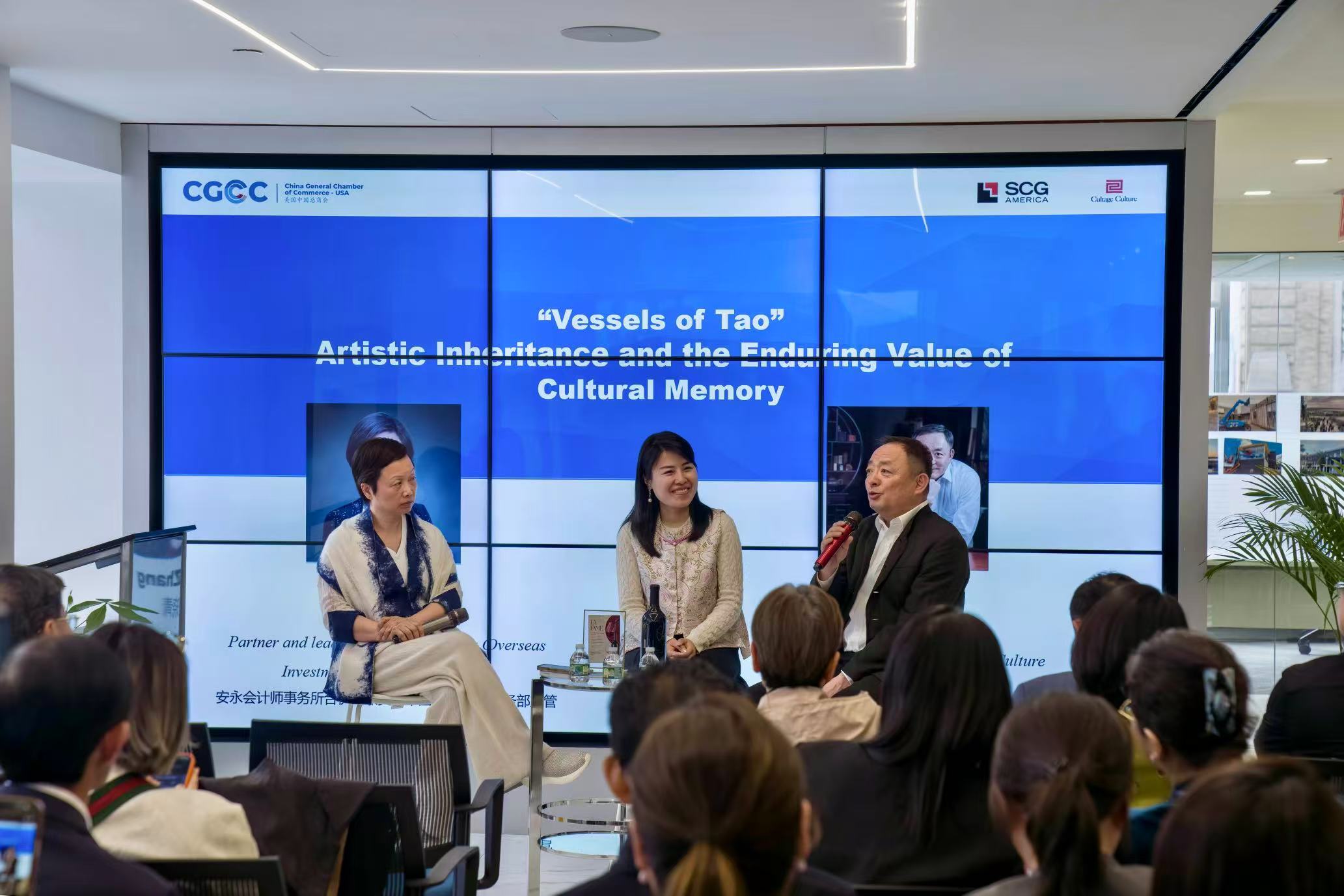 Left to Right: Xiaoqing ZHANG, Partner at Ernst & Young and Head of China Overseas Investment Practice in the Americas; Qianqian CHEN, COO at SCG America; Liang LIU, Founder and CEO of Baoyin Culture Co., Ltd.
Xiaoqing ZHANG, Partner at Ernst & Young and Head of China Overseas Investment Practice in the Americas, noted that long-term continuity for families and organizations depends not only on financial planning but also on the preservation of shared values and cultural frameworks. Without such foundations, she said, wealth structures may lose cohesion over time.
In a keynote address, Liang LIU, Founder and CEO of Baoyin Culture Co., Ltd., discussed China’s tradition of inscription and seal carving as enduring forms of cultural record-keeping. While modern digital tools have expanded methods of documentation, he noted that stone inscriptions and seals remain uniquely durable, preserving information in physical form across generations. He described seal art as both an artistic practice and a structured system of cultural transmission.
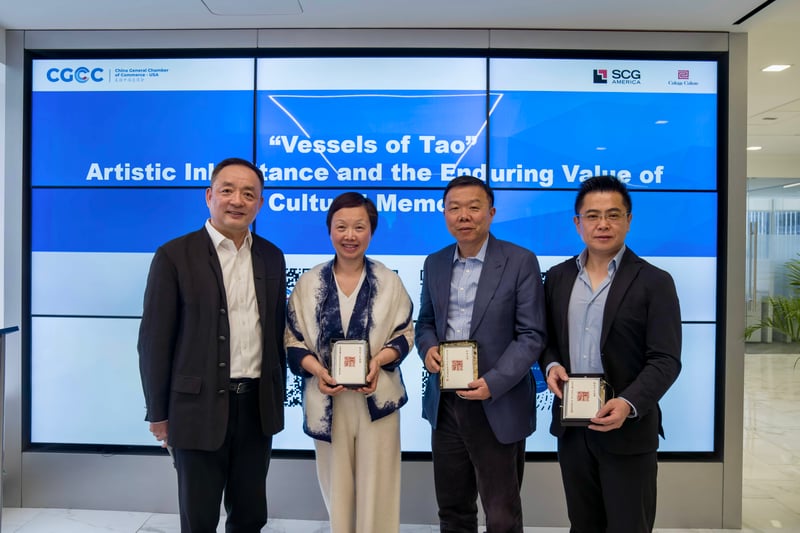
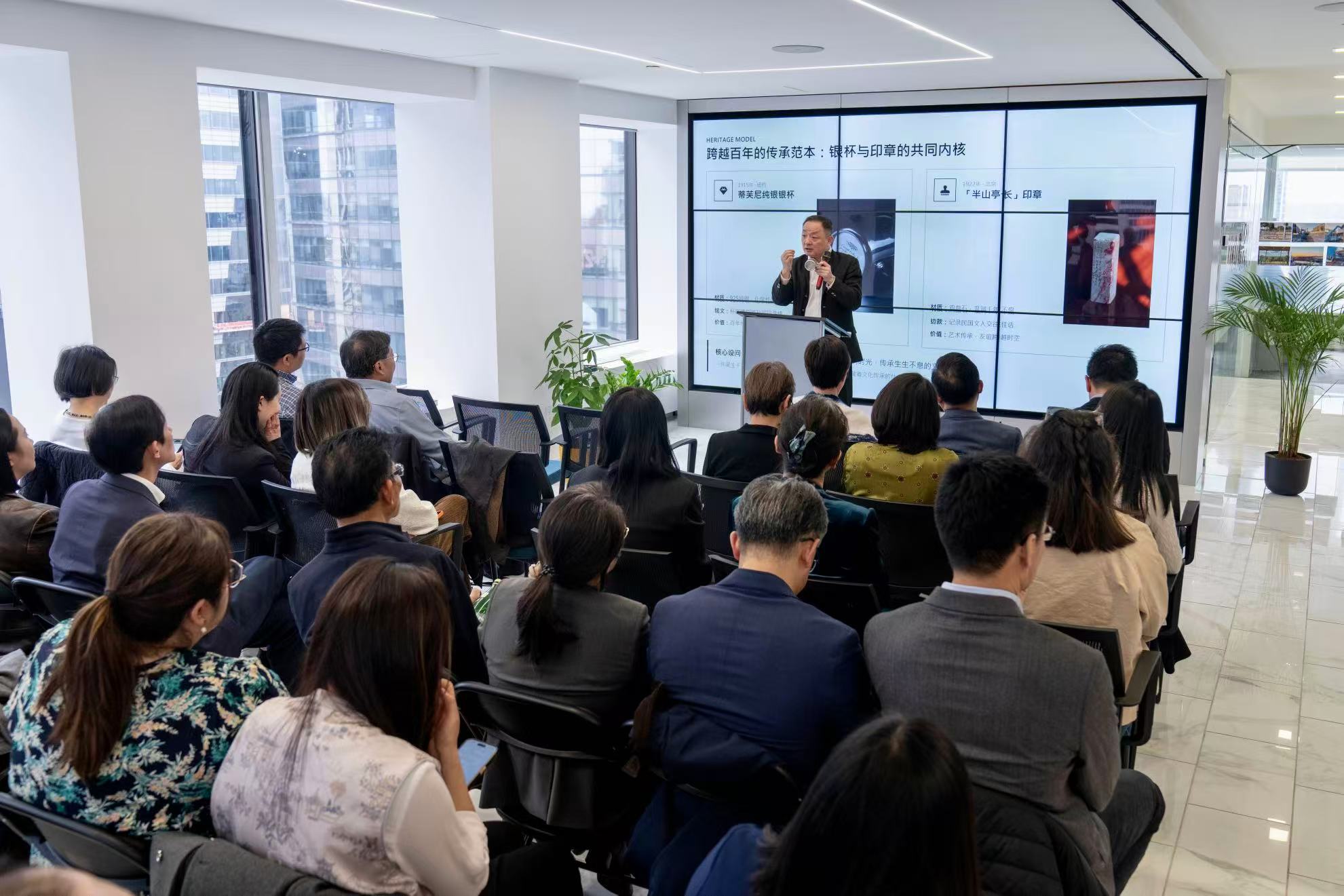 Liang LIU, Founder and CEO of Baoyin Culture Co., Ltd.
The event also featured an exhibition of more than 20 seals and archival materials, offering attendees a hands-on look at historical forms of documentation. Guests engaged in discussions around the objects, reflecting on the relationship between material culture and meaning-making.
Held in New York, a global hub of commerce and culture, the forum underscored a broader consensus among participants: in a rapidly changing world, cultural preservation is not a passive act, but an intentional process—one that shapes how societies remember their past and define their continuity into the future.
About CGCC
Founded in 2005, the China General Chamber of Commerce - USA (“CGCC”) has been recognized as the largest and most impactful not-for-profit organization representing the U.S. and Chinese business communities. As an independent, non-partisan, non-governmental chamber of commerce with a mission to create value, generate economic growth, and enhance cooperation, CGCC offers a broad range of programs, services, and resources to over a thousand multinational companies across the U.S.